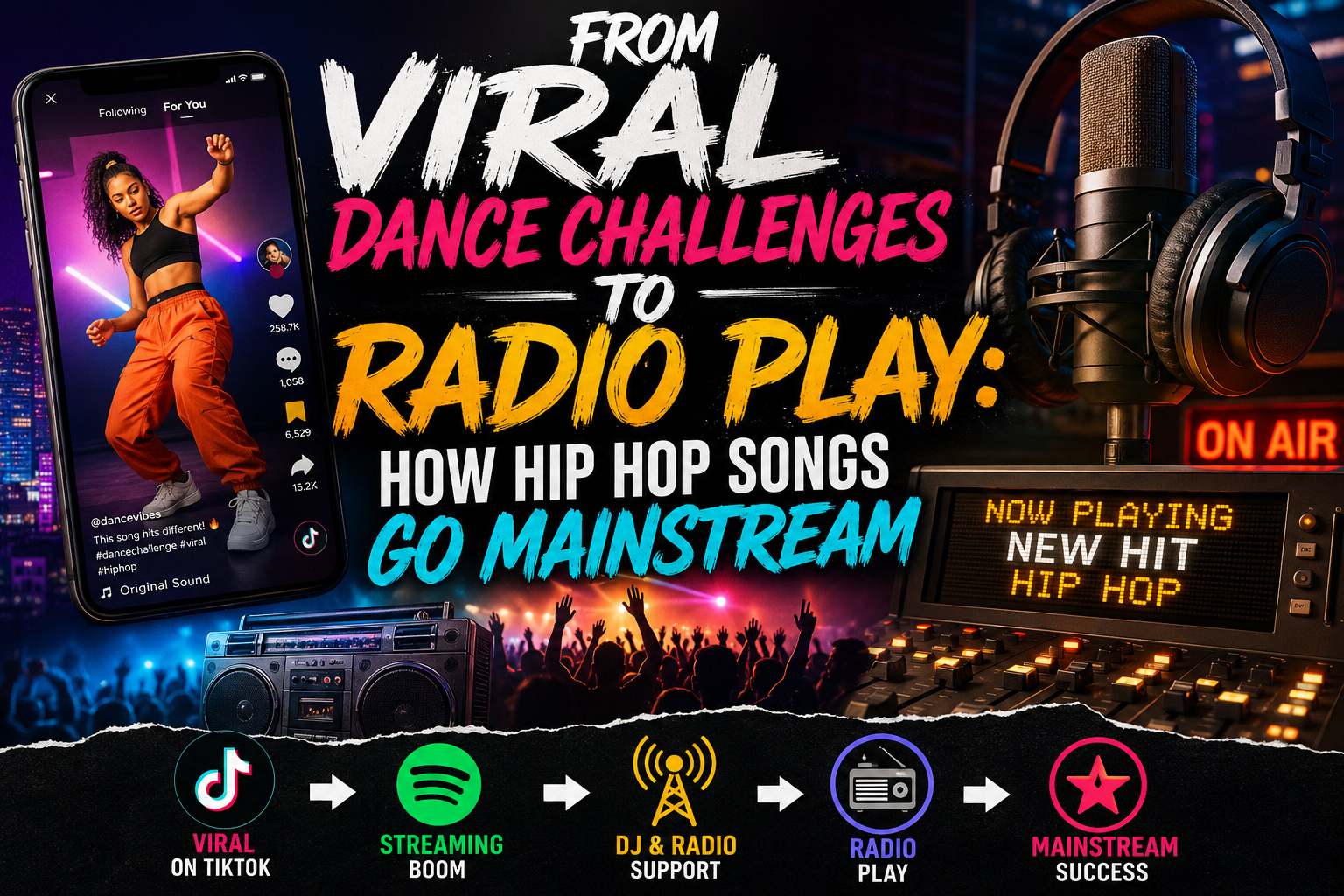
From Viral Dance Challenges to Radio Play: How Hip Hop Songs Go Mainstream
Hip Hop has always been more than music. It is culture, fashion, movement, storytelling, and energy combined into one powerful force. Over the years, the way Hip Hop songs become mainstream has changed dramatically. In the past, artists relied heavily on mixtapes, radio DJs, music television, and record labels to break new music. Today, social media platforms, viral dance challenges, influencers, streaming apps, and internet radio all play major roles in turning underground tracks into worldwide hits.
One viral moment can completely change an artist’s career overnight. A song uploaded online by an independent rapper can suddenly dominate TikTok, Instagram Reels, YouTube Shorts, and eventually traditional radio stations across the country. The journey from a viral dance challenge to mainstream radio play is now one of the most common paths for modern Hip Hop success.
The Power of Social Media
Social media has completely transformed music promotion. Platforms like TikTok, Instagram, and YouTube allow users to instantly share music with millions of people worldwide. Unlike traditional radio, where DJs and station managers controlled what songs were heard, social media gives listeners the power to decide what becomes popular.
Dance challenges have become one of the biggest tools in pushing Hip Hop songs into the mainstream. When users create choreography or trends around a catchy song, the music spreads rapidly across platforms. Millions of people begin using the same audio clip, which increases streams, downloads, and online engagement.
Songs with memorable hooks, heavy bass, energetic beats, or quotable lyrics often perform best in viral challenges. Once a challenge gains traction, influencers and celebrities usually join in, helping the song reach even larger audiences. Before long, major radio stations begin adding the track into regular rotation because demand is already proven online.
Streaming Changed Everything
Streaming services have also played a huge role in modern Hip Hop success. Platforms like Spotify, Apple Music, and YouTube Music track listener behavior in real time. Songs that suddenly experience massive streaming increases often catch the attention of playlist curators, record labels, and radio programmers.
Algorithms help push trending songs into recommended playlists, exposing new artists to listeners who may have never heard them before. A viral Hip Hop track can quickly move from independent playlists to major editorial playlists with millions of followers.
Once streaming numbers explode, radio stations usually follow. Program directors pay close attention to online momentum because it helps predict what listeners want to hear. In many cases, internet popularity now influences radio play more than record labels do.
Internet Radio and Independent Stations
Internet radio stations have also become important in helping Hip Hop songs go mainstream. Unlike traditional FM stations that may follow strict corporate playlists, online stations often have more freedom to support independent artists and trending music early.
Stations like MPT Radio help introduce listeners to classic Hip Hop, underground artists, throwback records, and rising talent before songs become fully commercialized. Online radio gives artists another platform to grow organically while building loyal fanbases.
Independent radio DJs also influence what songs gain attention in clubs, parties, and local music scenes. When DJs repeatedly support a song, listeners begin requesting it, sharing it online, and adding it to playlists. That local momentum can eventually grow into national attention.
The Role of Influencers and Celebrities
Influencers have become modern-day music promoters. A single video posted by a major influencer can instantly introduce a song to millions of followers. Celebrities, athletes, streamers, and content creators often help songs gain traction simply by using them in videos, workouts, or livestreams.
Hip Hop artists now actively market songs toward social media trends. Many songs are designed with catchy intros or hooks specifically meant for short-form videos. Labels even coordinate marketing campaigns with influencers to encourage dance challenges and viral trends immediately after release.
When enough people participate, the song becomes unavoidable online. Once mainstream media notices the trend, radio stations, blogs, podcasts, and television outlets begin covering the artist, further increasing popularity.
Radio Still Matters
Even with streaming and social media dominating music discovery, radio still plays an important role in making songs feel officially mainstream. Hearing a Hip Hop track on major radio stations gives it a sense of legitimacy and widespread acceptance.
Radio also reaches audiences who may not actively follow social media trends. Songs that successfully transition from internet popularity to radio rotation usually experience longer-lasting success. They become club anthems, sports arena songs, party records, and cultural moments.
For many artists, mainstream radio play represents a major milestone in their careers. It often leads to larger tours, brand partnerships, interviews, festival bookings, and increased record sales.